There are a lot of myths about EICRs, and they often make homeowners worry that their property won’t meet the required standard.
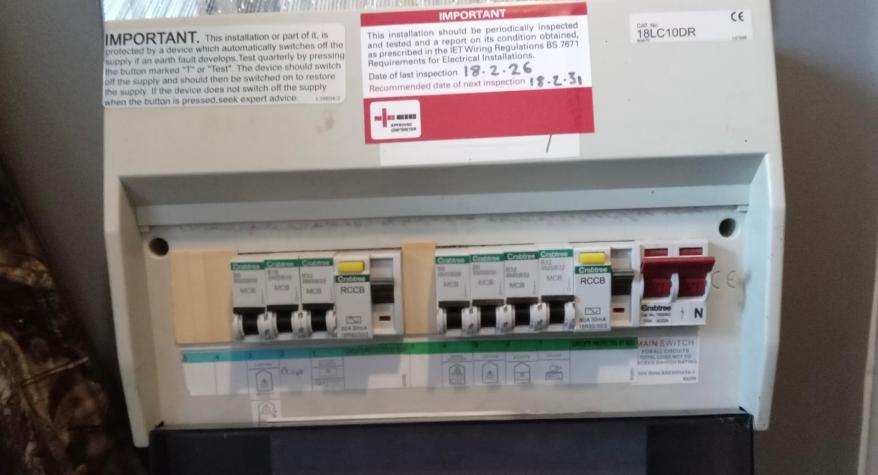
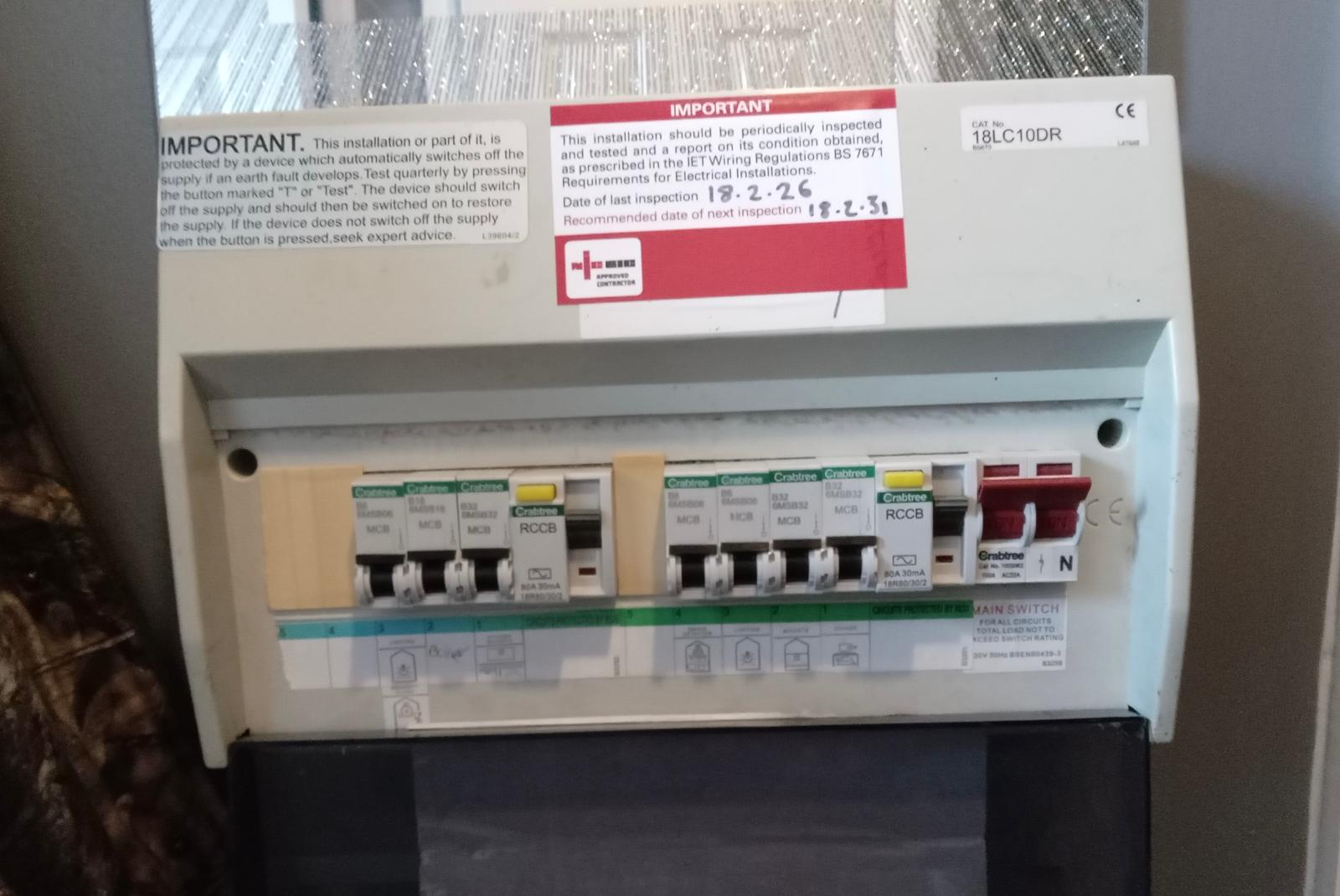
One of the questions I’m asked most often by homeowners in Bristol, is whether having a plastic consumer unit will cause a property to fail an EICR. In fact, this is the most common concern people raise before arranging an inspection.
If you have a plastic consumer unit and your EICR is due, there’s usually no need to panic.
Will a Plastic Consumer Unit Fail an EICR?
You may have heard stories about electricians failing otherwise safe properties simply because they have a plastic consumer unit.
However, having a plastic consumer unit is not automatically a Code 1 fault on an EICR.
That said, there is a difference between something being acceptable and something being ideal.
Regulations regarding the materials used for consumer unit enclosures have changed, but this does not automatically mean that all plastic consumer units fail. If a plastic unit is in good condition and working properly, it will not fail solely because of the material it is made from.
However, if there is damage or another fault, the installation could fail — but this would be due to the defect, not the plastic casing itself.
In some cases, an electrician may record an advisory note recommending a metal enclosure, as these are considered safer. Since the changes to the regulations on enclosure materials were introduced in 2016 under BS 7671 (18th Edition), many plastic consumer units installed before this date are still in use. If they were compliant at the time of installation and remain in good condition, they are not automatically a fail.
Are Bristol Landlords Required to Have a Metal Consumer Unit?
The rules for landlords differ from those for homeowners who live in their own property.
Landlords are legally required to have a valid, up-to-date EICR. If the report identifies Code 1 faults (which indicate immediate danger), the landlord must have them corrected within 28 days. Homeowners, by contrast, are not legally required to have an EICR and can choose whether to carry out recommended work, although following professional advice is always sensible.
There is a common belief that landlords must upgrade plastic consumer units to metal ones. While metal units are generally considered safer and may be recommended by an electrician, there is currently no law stating that landlords must replace a plastic unit solely because of its material.
Unless the unit is recorded as a Code 1 fault, there is no legal obligation to upgrade it. However, landlords should consider the safety implications carefully. Upgrading a consumer unit typically costs a few hundred pounds, and as a landlord, you are responsible for the safety of your tenants.
What Is the Issue with Plastic Consumer Units?
You might wonder what the concern is. Plastic has been used for many years without obvious problems.
However, research has shown that many electrical fires originate in consumer units. The risk is not that plastic units cause fires, but that plastic is combustible. If a fire starts inside the unit, a plastic enclosure can contribute to the spread of flames.
When plastic burns, it can release toxic fumes that may be harmful. Even without a large fire, excessive heat caused by a fault could potentially release harmful gases.
In addition, if a fire begins inside a plastic consumer unit, it may spread more easily. As consumer units are often installed along escape routes, this could make evacuation more difficult.
Tests carried out by the London Fire Brigade showed that metal consumer units are more effective at containing a fire within the enclosure.
Commercial Properties
For commercial property owners and managers, electrical safety is both a safety issue and a legal requirement.
Commercial properties are generally subject to stricter regulations because their electrical systems are often more complex and used more heavily. Regular EICRs help identify potential hazards and reduce the risk of business disruption caused by electrical faults.
Should You Upgrade Your Consumer Unit?
The first question to consider — particularly if you are a landlord — is whether your consumer unit complies with current regulations. If it does not, upgrading is advisable.
Plastic consumer units installed before 2016 do not meet the current enclosure requirements introduced in the 18th Edition of the Wiring Regulations. While this does not automatically mean they are unsafe, newer metal units provide improved fire containment.
For homeowners, the decision to upgrade is ultimately a personal one, but from a safety perspective, it is strongly recommended.
An EICR will highlight any faults with your consumer unit. Few people would feel comfortable knowing there is a potential fire risk in their property.
If cost is a concern, it is worth weighing this against the potential expense and stress of fire damage. Replacing a consumer unit is relatively inexpensive compared to the financial and personal impact of an electrical fire.
If you're based in or around Bristol and are looking to book an EICR or upgrade your consumer unit, give us a call today or get in touch!